UFABETCricketIPL Points Table, Standings, and Rankings
IPL Points Table, Standings, and Rankings
IPL points table, standings, and rankings are integral components of the Indian Premier League (IPL), providing fans and analysts with a comprehensive view of team performances throughout the season. The IPL is one of the most celebrated T20 cricket tournaments globally, operating on a single-year format (e.g., the 2024/2025 season), unlike multi-year leagues. Each season begins around March or April and concludes by May or June, making it a compact and high-energy competition.
The IPL points table is the backbone of the league’s competitive structure, showcasing each team's position based on their performance. The table helps determine which teams advance to the playoffs and ultimately compete for the championship. Metrics such as wins, losses, ties, no-results, and Net Run Rate (NRR) are tracked on the points table of the IPL, ensuring that rankings reflect a fair assessment of a team’s consistency and efficiency.
The IPL consists of 10 teams representing cities across India. The teams are divided into two groups, the Eastern and Western Conferences, for scheduling purposes. Each team plays 14 matches in the league stage, including games against opponents from Eastern and Western conferences. The balanced approach ensures fairness while fostering regional rivalries and a nationwide fanbase.
Betting on the IPL with UFABET offers a unique and seamless experience for fans and bettors alike. UFABET provides a comprehensive IPL score table and schedule, making it easy to track matches, team performances, and betting opportunities. It features competitive odds, live betting options, and expert insights, giving users an edge when placing wagers. UFABET ensures a secure and user-friendly platform, making it the go-to choice for IPL enthusiasts looking to engage with the tournament beyond just watching.
The IPL table is more than just a scoreboard. The IPL table serves as the vital hub of the tournament, providing fans and bettors with crucial insights into team dynamics and performances. The league remains an electrifying cricketing spectacle, whether following the IPL standings to support the favorite team or using the points table IPL to make informed bets on UFABET.
IPL Standings 2024 Season
Coming soon
How to Understand the IPL Points Table?
To understand the IPL Points Table, grasp its significance and the factors determining a team's rank in the Indian Premier League (IPL). The IPL leaderboard(IPL score table), tracks the performance of teams throughout the tournament and is updated after every match to reflect the latest standings.
The IPL points table is a ranking system that showcases the position of each team in the league based on their performance. It determines which teams qualify for the playoffs and, ultimately, the final. Each team’s standing is evaluated through wins, losses, net run rate (NRR), and points earned.
The IPL, or Indian Premier League, is one of the most famous T20 cricket tournaments globally. There have been high-octane matches, celebrity endorsements, and tremendous financial value since its 2008 inception. The Indian Premier League (IPL) has seen significant growth in its monetary value over the years. The business value of the IPL is estimated to be $16.4 billion (approximately ₹1,35,000 crore) as of 2024. The standalone brand value of the IPL is pegged at $3.4 billion (approximately ₹28,000 crore). The Chennai Super Kings (CSK) franchise remains the most valuable, with a brand value of $231 million.
The IPL's growth reflects its global appeal, strategic initiatives, and strong fan engagement. The Tata Group has secured title sponsorship for the IPL from 2024 to 2028 for about ₹2,500 crore, highlighting the league's commercial success. The league features teams representing different Indian cities and is celebrated for attracting top international and domestic cricketers. The IPL's logo, a batsman mid-shot, symbolizes its dynamic nature and appeal.
The IPL's most iconic teams include the Mumbai Indians (MI), Chennai Super Kings (CSK), Kolkata Knight Riders (KKR), and Royal Challengers Bangalore (RCB). Connected tournaments like the Champions League T20 have further amplified its prestige. The Chennai Super Kings are the latest champions (as of 2023), while the Mumbai Indians hold the record for the most championships, with five titles.
Following a round-robin format, each team plays 14 matches in the IPL, twice against each other (once at home and once at the opponent's ground). A team's win-loss record determines its ranking on the IPL score table, contributing directly to its point accumulation.
The points table tracks several key metrics that define team standings. The position reflects the rank of a team based on its performance. The team lists the names of the participating IPL teams. Wins and Losses indicate the number of matches a team has won or lost, while ties record matches that ended in a draw. NR (No Result) accounts for matches abandoned due to unforeseen circumstances like weather. Teams earn 2 points for each win, while no points are given for a loss. Each side receives one point if the match is a tie or if it is abandoned.
Another crucial point table factor is the Net Run Rate (NRR), which is a tiebreaker when two or more teams have the same points. NRR evaluates team performance by comparing the rate at which they score runs to the rate at which they concede them throughout the tournament. The metric determines standings when the competition is close.
The IPL leaderboard is updated immediately after every match to reflect the current standings, making it a real-time tracker for fans and analysts. Teams aim to finish in the top four positions, which secure their place in the playoffs. The top-ranked squad enjoys a psychological and tactical advantage, with direct entry into critical playoff matches.
How Important is the IPL Points Table for Betting?
The importance of the IPL points table for betting serves as a comprehensive guide to understanding IPL standings and their impact on IPL betting strategies. The table offers detailed insights into team rankings, win-loss records, and other performance metrics, enabling bettors to make informed decisions and anticipate outcomes. A team's form, consistency, and momentum are seen in the standings, which provide bettors with valuable information that impacts the odds and betting opportunities in the IPL.
The IPL standings shape betting decisions by reflecting a team’s position and recent performance in the tournament. Higher-ranked teams are considered favorites, leading to lower odds but safer bets. Teams at the lower end of the table offer higher-risk but more rewarding opportunities. For example, a consistently high-performing team with a strong winning record is a reliable choice for bettors, while underdog teams struggling for form offer lucrative odds for bettors willing to take calculated risks.
Key attributes in the points table are essential for effective IPL betting. Wins and losses measure a team’s success and ability to handle pressure. Teams with more wins are more dependable, while frequent losses suggest potential weaknesses. Net Run Rate (NRR) is another crucial metric, as it reflects a team’s efficiency in scoring and defending runs. Teams with a strong NRR are dominant and consistent, making them attractive betting options.
The points a team accumulates hold value as they determine playoff qualification and reflect the stakes of each match. Teams fighting for playoff spots are highly motivated and deliver exceptional performances. Teams with secured playoff positions rest key players, affecting their performance and altering the odds. A team’s position in the standings influences its perception in betting markets, with higher-ranked teams offering lower odds and lower-ranked teams presenting better value for risk-tolerant bettors.
The IPL points table is a critical resource for anyone involved in IPL betting. Winnings, losses, NRR, and points are all metrics that help bettors make better, more strategic decisions. Understanding the dynamics of the table and its impact on team performance enhances betting outcomes and helps navigate the unpredictable nature of IPL odds.
How are Teams Ranked for Positions in the IPL Points Table?
The teams are ranked for positions in the IPL points table by wins, no result, and net run rate (NRR), creating a transparent and performance-driven ranking system. Each team earns 2 points for every win, making consistent victories the most straightforward path to climbing the table. Each side gets one point if the match is canceled because of bad weather or other unanticipated circumstances. The system ensures fairness and maintains competitive balance when external factors disrupt play.
A crucial factor in determining IPL ranking is the Net Run Rate (NRR), which acts as a tiebreaker when two or more teams have the same number of points. NRR evaluates a team's efficiency by comparing the average runs they score per over to the average runs they concede per over. A higher NRR indicates a stronger and more dominant performance, reflecting a team's ability to excel in batting and bowling. The measure becomes important in tightly contested tournaments, where minor differences in performance separate playoff qualifiers from eliminations.
The ranking system ensures that IPL teams are rewarded for their victories and for their ability to secure convincing wins and maintain consistency across the tournament. Teams are not allowed to focus on narrow victories and are instead encouraged by NRR to strive for comprehensive performances, even though points are the main metric. The dynamic adds depth to the league’s competitiveness and influences strategies as teams focus on securing wins and improving their NRR.
The IPL points table ranks teams based on their points and NRR, reflecting their performance and consistency. It determines which teams advance to the playoffs and provides fans and analysts with a clear understanding of the league's competitive landscape. The system is central to the tournament’s fairness, transparency, and excitement.
How Common are Ties in the IPL Standings?
Ties are common in IPL standings in the middle or lower sections of the IPL points table, where teams have similar win-loss records. Ties are more common among the top two or three teams, but they happen between the third and sixth-ranked teams because playoff spots are so tightly contested. The limited number of league matches (14 per team) and factors like weather disruptions, which result in shared points, contribute to these occurrences.
One notable instance of a tie occurred during IPL 2018, where Sunrisers Hyderabad, Chennai Super Kings, and Kolkata Knight Riders all finished the league stage with 18 points each. The tie was resolved using the Net Run Rate (NRR), a measure of a team’s scoring and conceding efficiency throughout the tournament. The same thing happened in IPL 2010 when several teams were tied for first place in the points standings, and NRR was the deciding factor in who got to play in the playoffs. The examples highlight how critical NRR is in breaking ties and determining final rankings.
Ties most commonly occur among teams fighting for playoff spots, ranked third to sixth. It is because these teams have comparable win-loss records, creating tight competition for the final playoff berths. Matches impacted by external factors, such as rain or other interruptions leading to shared points, further increase the likelihood of ties in these rankings. Teams at the top of the table avoid ties due to their consistent performance, which creates a clear points gap. Bottom-ranked teams rarely tie because their losses outweigh their victories.
Ties in the IPL standings amplify the league's excitement and unpredictability, making the final matches of the league stage crucial for determining playoff spots. IPL standings make the situations dramatic, making the spectator care about every run, wicket, and point. A team's strategy, like playing aggressively to increase NRR or defensively to limit the other team's scoring, is influenced by ties. The moments add pressure as teams aim for victories and focus on dominating performances to secure higher NRR rankings.
What are the Factors that Influence the IPL Points Table?
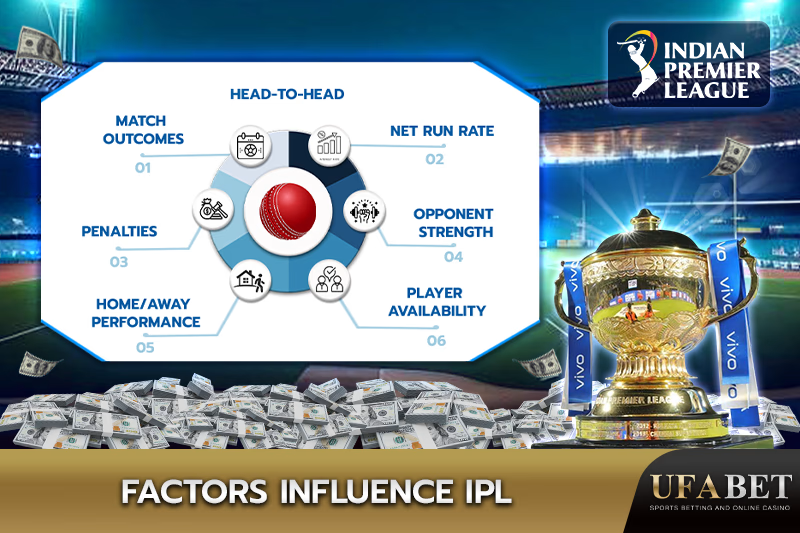
The factors that influence the IPL points table are listed below.
Match Outcomes: The most direct factor, where teams earn points for wins (2 points) and no results (1 point each).
Head-to-Head Results: Teams' head-to-head results determine their ranking when they have equal points.
Net Run Rate (NRR): Calculated as the difference between the runs scored per over and the runs conceded per over, NRR breaks ties and influences positions in the IPL points table.
Penalties or Deductions: Teams face point deductions or penalties for breaches of conduct, which impact their position in the IPL standings.
Strength of Opponents: The performance against stronger teams provides insights into a team's capability, indirectly affecting perceptions and strategies.
Home vs. Away Performance: Teams perform differently in home and away matches, influencing their standings.
Player Availability and Injuries: Key players' fitness and availability impact match outcomes and, thus, the points table. The dynamics of the IPL result and the evolution of the IPL points table throughout the season are better understood by taking these factors into account.
How do the IPL Standings Affect the Teams?
The IPL standings affect the teams by influencing strategies, morale, business decisions, and fan engagement. The rankings determine playoff qualification and impact long-term planning, financial outcomes, and the franchise's trajectory.
The IPL standings directly influence a team's strategies as the season progresses. Teams at the top of the table aim to maintain their momentum, experimenting cautiously with lineups while ensuring key players remain in form and injury-free. Teams in mid-table or lower standings approach aggressively to climb the rankings, prioritizing crucial wins and improving their Net Run Rate (NRR) to secure playoff spots. The standings force struggling teams to try new things strategically, like emphasizing rebuilding for the next season or seeing how well their bench performs.
A team's position on the IPL points table affects morale and chemistry. Teams already doing well see their on-field performance increase as they gain confidence, team spirit, and a winning mentality from being ranked highly. Lower standings lead to frustration, stress, and internal discord, which affect team chemistry and disrupt their gameplay. Strong leadership and coaching in managing morale during challenging times ensures players remain motivated and focused.
The end-of-season standings guide trade and free agency decisions. Teams finishing lower in the standings reassess their rosters to address weaknesses, trading underperforming players and pursuing high-value acquisitions to strengthen their squads. Top-performing teams, while less likely to overhaul their core group, look for specific players to fill gaps or provide depth. For example, franchises target experienced bowlers or power hitters to address deficiencies highlighted during the season.
Teams in last place in the IPL concentrate on restocking for the following season, even though the league does not use a draft lottery system like other sports leagues. It includes investing in younger talent during the IPL auction, emphasizing player development, and restructuring team strategies. Poor standings push teams into long-term rebuilding phases aimed at creating sustainable success.
Standings directly impact fan engagement and revenue. Teams at the top of the IPL standings enjoy increased fan support, higher ticket sales, and more merchandise revenue due to their success and visibility. Poor play for lower-ranked teams results in financial strain, dwindling sponsorship deals, and fan interest. Engaging fans with initiatives, promotions, and transparent communication about plans helps mitigate these challenges.
How do the Current IPL Standings compare to Last Season?
The current IPL standings, compared to last season, show remarkable improvement, while others have struggled to replicate their past success. The shifts highlight the dynamic and unpredictable nature of the IPL, emphasizing the importance of strategy, form, and adaptability.
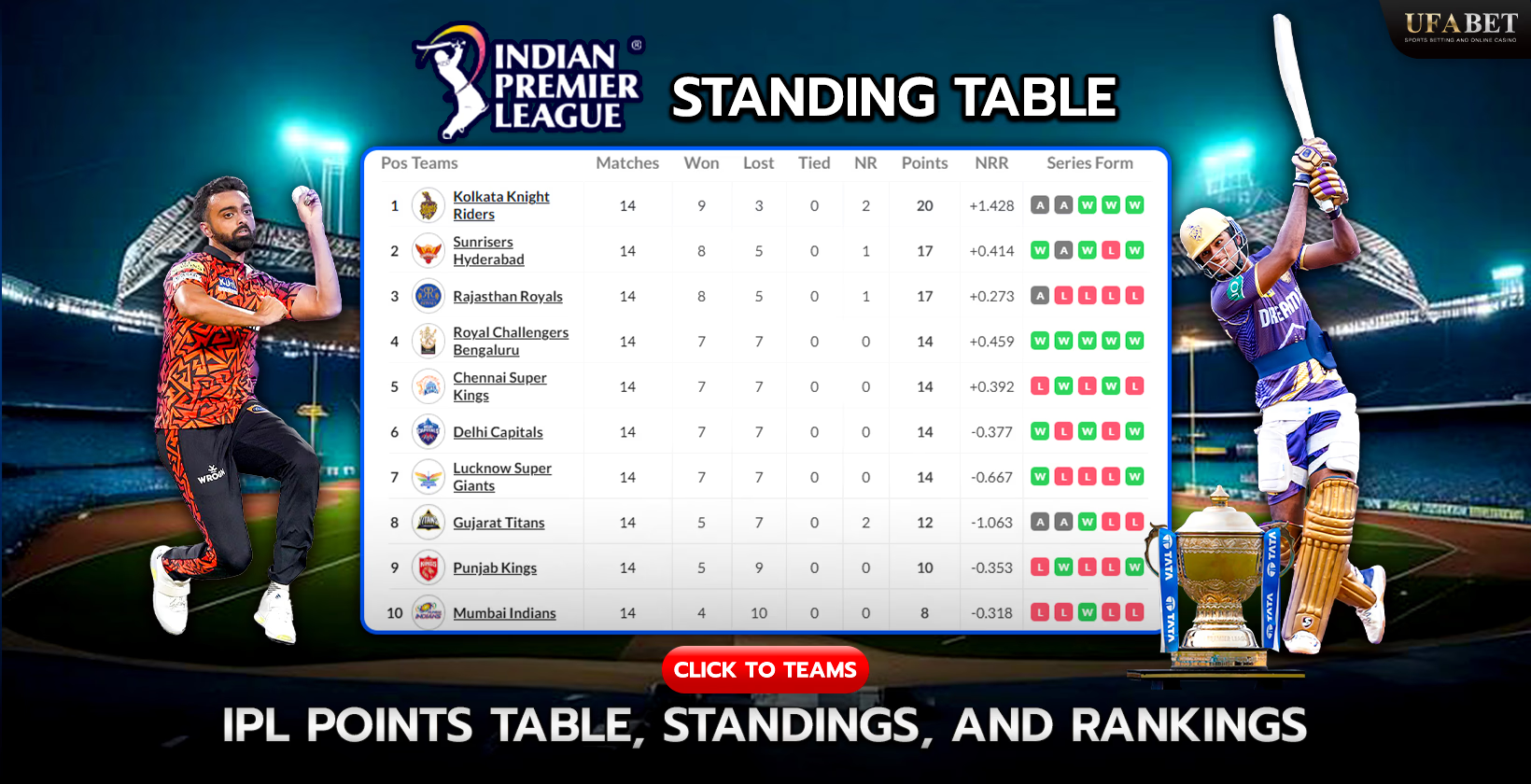
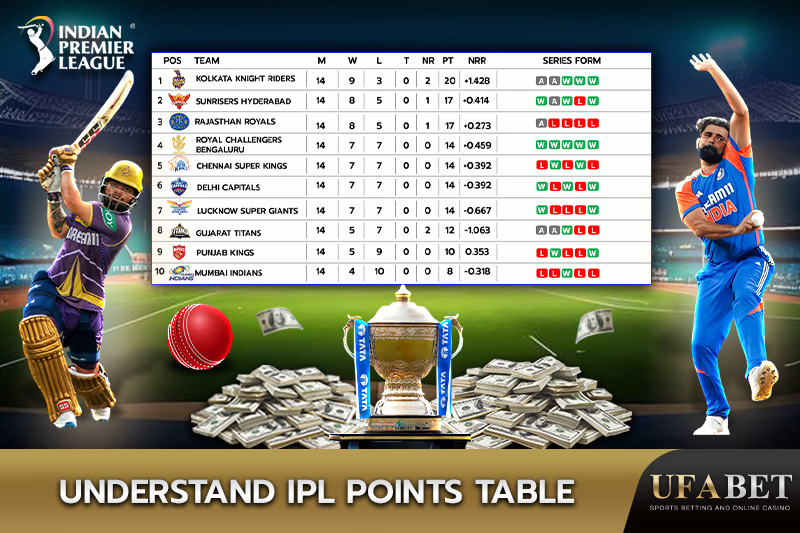
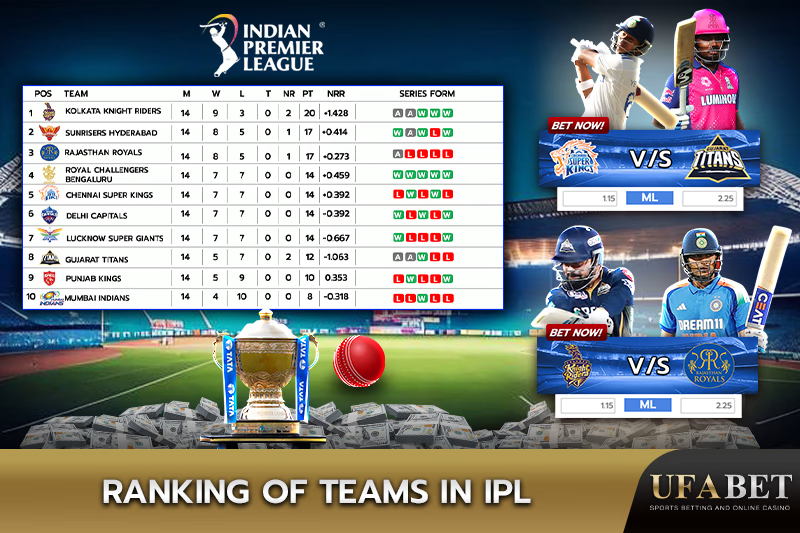
The Kolkata Knight Riders (KKR) have been the standout performers, rising from 8th place in 2023 to 1st place in 2024 with 20 points (9 wins, 3 losses, NRR +1.428). The dramatic improvement underscores their strategic planning and consistent execution throughout the tournament, culminating in their dominant league position. The Sunrisers Hyderabad (SRH) have moved from 6th place in 2023 to 2nd place in 2024 with 17 points. Their resurgence has been marked by strong performances in crucial matches, showcasing their ability to bounce back from a mediocre season last year.
The Mumbai Indians (MI) have had a disappointing campaign, falling from 4th place in 2023 to 10th place in 2024 with just 8 points (4 wins, 10 losses, NRR -0.318). Leadership issues and underwhelming performances from key players have contributed to their decline. The Gujarat Titans (GT), champions in 2023, now sit in 8th place with 12 points (5 wins, 7 losses, NRR -1.063). The sharp fall from grace highlights challenges in maintaining consistency at the highest level.
Other teams, such as the Delhi Capitals (DC) and Punjab Kings (PBKS), have struggled, remaining in the bottom half of the table. DC’s NRR worsened in 2024, reflecting their inability to close matches effectively, while PBKS failed to improve their standings, staying in 9th place with a declining NRR.
Last season’s top performers have faced mixed fortunes. The Chennai Super Kings (CSK), who were runners-up in 2023, now find themselves in 5th place with 14 points. They have had moments of greatness, but their consistency issues have prevented them from making the playoffs. The Lucknow Super Giants (LSG), who finished 3rd in 2023, are now in 7th place, struggling to maintain their momentum. The Gujarat Titans (GT) have not lived up to their championship-winning performance, reflecting the challenges of sustaining top-level success in a highly competitive league.
Teams like KKR and SRH, with consistent improvements and positive NRRs, have demonstrated the advantages of strong leadership, tactical flexibility, and compelling player performances. Their rise in the standings has translated into increased fan engagement and revenue, showcasing the tangible benefits of success in the league. Teams like MI and GT face the challenge of rebuilding and re-strategizing for the next season to regain their competitive edge.
The contrasting standings between 2024 and 2023 highlight the ever-changing dynamics of the IPL. Success depends not just on past laurels but on adaptability, depth in squad performance, and seizing opportunities in a highly unpredictable format.
What is the Format for IPL Matches?
The format for IPL matches is designed to ensure a balanced, competitive, and exciting tournament for players and fans. The IPL format combines a home-and-away structure with group divisions to create a challenging and dynamic league phase, followed by a high-stakes playoff stage.
The ten teams competing in the IPL league stage are split into two sets of five teams each. Group A includes Mumbai Indians, Kolkata Knight Riders, Rajasthan Royals, Delhi Capitals, and Lucknow Super Giants, while Group B features Chennai Super Kings, Sunrisers Hyderabad, Gujarat Titans, Royal Challengers Bangalore, and Punjab Kings. Each team plays 14 matches, including two matches (home and away) against each of the other four teams in their group, one match against four teams from the opposite group (alternating home and away), and two matches (home and away) against the remaining team from the opposite group. The points system awards 2 points for a win, 1 point for a no result, and 0 points for a loss, with Net Run Rate (NRR) acting as a tiebreaker for teams with equal points.
The top four teams from the league stage qualify for the playoffs. The stage begins with Qualifier 1, where the 1st and 2nd ranked teams face off, with the winner advancing directly to the final. The Eliminator pits the 3rd and 4th ranked teams against each other, with the loser eliminated. The winner of the Eliminator plays the loser of Qualifier 1 in Qualifier 2 for a spot in the final. The tournament concludes with the Final, where the Qualifier 1 and Qualifier 2 winners compete for the IPL championship.
The format offers numerous advantages. The home and away structure ensures fairness by allowing teams to play in varied conditions, while the group divisions maintain a balanced competition. The playoff system keeps the league engaging until the last game, offering multiple chances for higher-ranked teams to reach the final while adding suspense for fans. The IPL 2024 format continues to uphold the league’s reputation as one of the most thrilling and unpredictable cricket tournaments globally.
How many Matches are in an Entire IPL Season?
There are 70 matches in an entire IPL season during the league stage, followed by 4 playoff matches, making a total of 74 IPL matches. The comprehensive structure provides a fair and competitive framework for all 10 teams, ensuring excitement and engagement throughout the tournament.
The 70 league matches are designed to give each team 14 games in the group stage. Teams are divided into two groups of five and compete against others in a balanced format. Each team plays 2 matches (home and away) against four teams within their group, 1 match against four teams from the opposite group, and 2 matches (home and away) against one designated team from the opposite group. The schedule ensures variety in opposition and conditions, testing the adaptability and consistency of each team.
The tournament moves to the playoffs, a round of four matches, following the league stage. The playoffs begin with Qualifier 1, where the 1st and 2nd ranked teams compete for a direct spot in the final. The Eliminator follows, featuring the 3rd and 4th ranked teams, with the loser eliminated. The winner of the Eliminator faces the loser of Qualifier 1 in Qualifier 2, determining the second finalist. The season concludes with the Final, where the champions of the IPL season are crowned.
The structure, featuring 74 IPL matches, balances competitive fairness with fan engagement. The structure provides teams ample opportunities to demonstrate their capabilities while maintaining the suspense and excitement of high-stakes games. The format maximizes revenue through ticket sales, broadcasting rights, and sponsorships, solidifying the IPL’s status as one of the most celebrated cricket tournaments worldwide.
How to Track IPL Games Schedule?
To track the IPL schedule, follow 4 simple steps to stay updated with match timings, venues, and team matchups. Following the steps makes keeping track of the IPL schedule easy, ensuring bettors don't miss a moment of the tournament's thrill.
First, visit the official IPL website, which provides the most accurate and up-to-date information about the league. Find the match calendar, including venues, start times, and team details. Second, popular mobile apps like Cricbuzz or ESPNcricinfo are used. The apps offer real-time updates, notifications, and a detailed IPL schedule to ensure bettors never miss a game.
Third, consider bookmarking these resources or enabling device notifications to receive instant alerts about match changes or updates. It is helpful for fans who want to stay connected on the go. Lastly, visit UFABET's dedicated IPL schedule page for a more tailored experience. The page lists the match schedule and includes valuable insights, betting tips, and promotional offers, making it the perfect companion for fans who enjoy playing and betting on IPL matches.
How Long is the IPL Season?
The IPL season lasts 8 to 9 weeks, starting in late March or early April and concluding in late May or early June. The timeframe encompasses the league stage and the playoffs, providing a comprehensive tournament structure that balances competitive rigor with fan engagement.
Each team plays fourteen matches throughout the league stage, split evenly between home and away venues. The phase alone takes several weeks, given the need for breaks between matches to allow players to rest, recover, and travel. The tournament continues for one more week after the league stage ends, with the top four teams advancing to the playoffs. The playoffs include Qualifier 1, the Eliminator, Qualifier 2, and the Final.
The schedule is designed to maintain a steady pace, ensuring fans remain engaged throughout the season without overloading players. Breaks between matches and travel schedules are optimized to minimize player fatigue and logistical challenges, contributing to high-quality performances during the IPL. The 8 to 9-week duration strikes the perfect balance between a comprehensive cricketing competition and sustaining excitement for audiences worldwide.